One Episode at a Time: Why Broadcasters Are Betting on the Weekly Wait
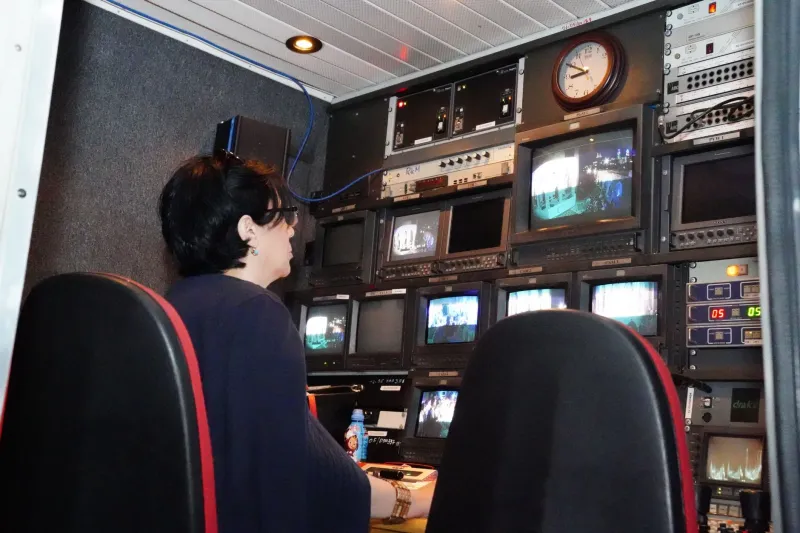
There was a time, not so long ago, when the television scheduler was considered a dying profession. The rise of on-demand platforms and the binge-release model had seemingly rendered the craft of constructing a weekly schedule as redundant as the Ceefax page. Yet something curious is happening in the commissioning suites and playout departments of British broadcasting. The weekly episode is back, and it is bringing audiences with it.
The evidence is accumulating steadily. BBC One's recent run of prestige drama, Channel 4's returning factual entertainment formats, and even the UK arms of global streamers have all, to varying degrees, reintroduced the deliberate pause between episodes. The question occupying those who study audience behaviour is whether this represents a genuine recalibration of how viewers want to consume content — or whether it is, at its heart, a calculated manufacturing of scarcity in a landscape drowning in choice.
The Scheduler's Quiet Revival
For those who have spent careers shaping the rhythm of British television, the shift carries a certain vindication. "Scheduling has always been about creating moments," says one senior commissioning editor at a major terrestrial broadcaster, speaking on condition of anonymity. "When everything is available at once, there is no moment. There is just a catalogue."
The psychology underpinning this view is well documented. Appointment viewing — the act of gathering around a specific programme at a specific time — generates a social energy that on-demand consumption rarely replicates. Water-cooler conversation, trending social media discussions, and the collective anticipation of a forthcoming episode all contribute to what researchers increasingly describe as the cultural footprint of a series. A show dropped in its entirety on a Friday evening may be consumed and forgotten within a fortnight; the same programme parcelled out weekly can sustain public discourse across two months.
Audience researcher Dr Patricia Holt, whose work has informed several major UK broadcasters, frames it plainly: "Binge-watching is a solitary activity, even when you are doing it alongside someone else. Weekly viewing is inherently communal, because you are experiencing it alongside millions of other people simultaneously. That shared experience has enormous value — both culturally and commercially."
Streaming Platforms Reconsider Their Own Rules
Perhaps the most striking aspect of this trend is its emergence within the streaming sector itself. Platforms that built their identities on the promise of total, immediate access are now experimenting with serialised release windows. The rationale is partly economic: a series that maintains subscriber engagement across eight weeks retains those subscribers for eight weeks. A binge-and-cancel cycle, particularly prevalent among younger audiences, offers no such assurance.
British productions have become something of a testing ground for these revised strategies. Several high-profile UK-originated series commissioned by global platforms have been released on a weekly basis in recent months, a departure from the drop-all-at-once model that previously defined the sector. The results, whilst commercially sensitive and not universally disclosed, are reported internally to be encouraging in terms of sustained viewing figures and social engagement metrics.
One independent producer with credits across both terrestrial and streaming platforms describes the change in atmosphere during commissioning conversations. "A year ago, if you suggested a weekly rollout to a streamer, you would have been politely ignored. Now they are raising it themselves. The conversation has shifted considerably."
Engineering Anticipation
Critics of the weekly model are not difficult to find, and their scepticism is not without foundation. There is a meaningful distinction between organic appointment viewing — the kind that developed naturally around programmes such as early series of Broadchurch or Line of Duty — and a strategically engineered version designed to simulate that experience in a more controlled environment.
"Let us be honest about what this sometimes is," says one television critic and commentator with long experience covering the industry. "It is a marketing strategy dressed up as a creative decision. If your show genuinely cannot sustain weekly attention, releasing it incrementally does not transform it into appointment television. It just delays the moment audiences stop caring."
This is a fair point, and schedulers acknowledge it. The weekly model only delivers its promised benefits when the underlying material is strong enough to warrant the wait. A mediocre series released episodically does not become compelling by virtue of its release cadence; it simply prolongs the period during which viewers feel mildly obligated to return.
Nevertheless, the counterargument holds that the weekly structure can itself shape production decisions in beneficial ways. Commissioners who know a series will air episodically tend to invest more seriously in episode-level storytelling — in cliffhangers, in narrative architecture, in the craft of the individual instalment. The binge model, by contrast, can encourage a looser, more novelistic approach that rewards sustained consumption but offers little to the viewer who watches a single episode and then turns off.
The Live Moment Returns
Beyond drama, the resurgence of live and near-live television deserves consideration in this context. Talent competitions, sporting events, and reality formats have always commanded appointment viewing, but their continued dominance in the ratings — and the enthusiasm with which broadcasters continue to commission them — reflects a broader truth about how audiences engage with real-time shared experience.
The challenge for drama commissioners is to recreate something analogous. Whether through the deliberate weekly release, the theatrical event broadcast, or the carefully orchestrated finale, the goal is identical: to make the act of watching feel like participation in something larger than a private choice.
For British broadcasting, with its deep institutional memory of public service television and its tradition of programmes that genuinely stopped the nation, this is not an alien concept. It is, rather, a return to first principles — a recognition that the most powerful thing a broadcaster can offer is not a library, but a moment.
Whether the industry has the creative material to sustain that ambition is the question that will define the next phase of British television.