Beyond the M25: How Britain's Broadcasters Are Rewriting the Map of Television Production
For decades, the gravitational pull of London defined British television. Soho post-houses, West End casting suites, and the dense commissioning networks of Broadcasting House and ITV's South Bank headquarters made the capital the near-exclusive engine room of the nation's screen industries. That geography, long taken for granted, is now being deliberately dismantled.
A combination of regulatory pressure, economic pragmatism, and genuine creative appetite is driving ITV, the BBC, and Channel 4 to redistribute not just resources, but cultural authority, to cities that have long argued they deserve a fairer share of the broadcasting economy. Manchester, Bristol, Cardiff, and Glasgow are no longer simply locations for the occasional location shoot. They are becoming genuine production centres in their own right.
The Policy Architecture Behind the Shift
The momentum did not emerge spontaneously. Channel 4's enforced relocation of its headquarters to Leeds in 2019, following sustained government pressure, served as the most visible catalyst for a broader industry reckoning. The broadcaster's new National HQ in Leeds, alongside its creative hubs in Glasgow and Bristol, was initially met with scepticism from some quarters of the industry. Years on, however, the model has demonstrated that commissioning talent and production capability can thrive outside the capital.
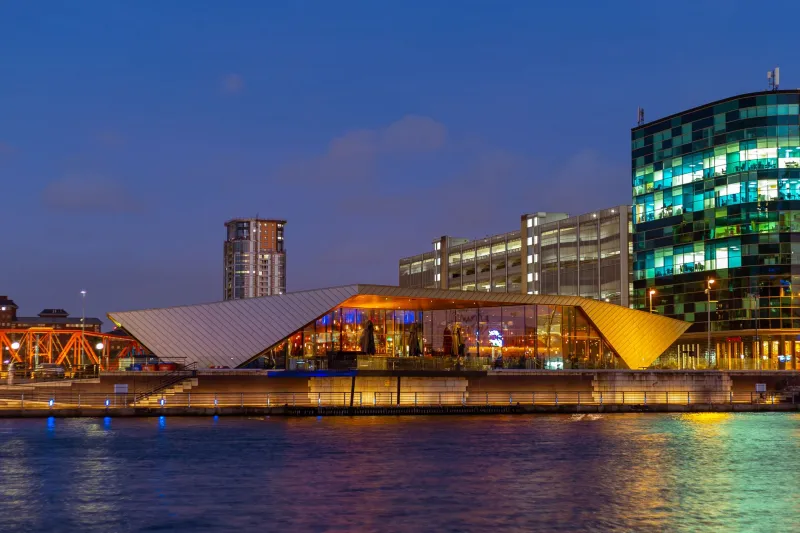
The BBC's own commitment to regional production is embedded within its charter obligations, with the corporation required to spend significant proportions of its television budget outside of London. Its Salford campus at MediaCityUK, now home to BBC Breakfast, Match of the Day production, and a range of factual and entertainment output, has become the most tangible symbol of that commitment. The site now employs several thousand people and has catalysed a broader creative cluster in Greater Manchester.
ITV, meanwhile, has continued to develop its Leeds-based drama operation, responsible for long-running series including Emmerdale, whilst expanding its regional news infrastructure and investing in independent production relationships across the nations and regions.
The Business Case: More Than Compliance
Whilst regulatory obligations have undoubtedly shaped the direction of travel, broadcasters and producers alike are increasingly articulating a genuine business rationale for decentralisation that extends beyond box-ticking.
Production costs outside London remain materially lower. Studio hire, crew day rates, and location fees in cities such as Bristol or Cardiff offer significant savings against equivalent London expenditure, a consideration that carries considerable weight in an era of compressed budgets and intensified competition from well-capitalised streaming platforms.
There is also the question of talent. The concentration of production activity in London has historically created a bottleneck, with the same pool of writers, directors, and crew cycling between projects. Regional production ecosystems, proponents argue, allow a wider range of voices and experiences to enter the industry, enriching the creative output as much as the employment statistics.
Independent production companies have been among the most vocal advocates of this argument. Several mid-sized producers operating from Manchester and Cardiff have reported that the expansion of regional commissioning has allowed them to build sustainable businesses without the overhead burden of a London base, whilst accessing commission relationships with major broadcasters that would previously have required a capital presence.
Infrastructure: Progress and Persistent Gaps
The picture is not uniformly positive. Significant infrastructure gaps remain, particularly in areas of specialist post-production, visual effects, and high-end drama facilities. For productions requiring complex VFX pipelines or access to the most advanced sound stages, London and, increasingly, internationally competitive facilities in the Republic of Ireland and Eastern Europe still present compelling arguments.
The Welsh Government's investment in Wolf Studios Wales in Cardiff has been one of the more ambitious attempts to address this deficit, providing large-format studio space capable of supporting high-budget drama production. The facility has attracted notable productions and is widely regarded as a meaningful addition to the UK's studio infrastructure outside the capital. Similar ambitions are evident in Scotland, where Screen Scotland has been working to develop production capacity alongside a growing slate of internationally distributed drama.
Connectivity infrastructure has also improved markedly. The expansion of high-speed broadband and the normalisation of remote collaboration tools — a trend dramatically accelerated by the pandemic — have reduced some of the practical friction that once made distance from London a genuine operational disadvantage.
The Human Dimension
Beyond the economics and the policy frameworks, decentralisation carries a deeply personal significance for the communities involved. Television and film production creates employment that is visible, culturally resonant, and economically multiplying. The presence of a major broadcaster or production company in a regional city generates ancillary activity across hospitality, transport, education, and the broader creative economy.
For early-career practitioners who might otherwise have faced a stark choice between relocating to London or abandoning industry ambitions altogether, the growth of regional production has opened pathways that simply did not exist a decade ago. Broadcast journalism training schemes, drama apprenticeships, and production runner programmes operating from regional hubs are beginning to build the kind of talent pipeline that sustains long-term industry health.
There remains, however, an honest conversation to be had about the nature of the roles being created. Senior editorial and commissioning positions have been slower to migrate from London than production crew roles, and some regional industry figures have expressed frustration that the most consequential decisions about what gets made and for whom continue to be taken in the capital.
What Comes Next
The direction of travel appears irreversible. The financial logic, the talent arguments, and the political appetite for a more geographically equitable broadcasting economy all point in the same direction. The question is no longer whether British television will decentralise, but how completely and how quickly that process will unfold.
For the broadcasters themselves, the challenge is to ensure that regional expansion represents genuine creative and structural investment rather than a rebranding exercise. Studios in Salford and commissioning offices in Leeds are meaningful only if they are accompanied by real editorial authority and the autonomy to take creative risks.
British television has always drawn much of its strength from its ability to reflect the full diversity of the nation back to its audience. The geography of production, it turns out, matters enormously to the geography of the stories being told. Getting that balance right may prove to be one of the defining editorial and industrial challenges of the decade ahead.