Heard and Seen: The Quiet Transformation of Accessibility in British Broadcasting
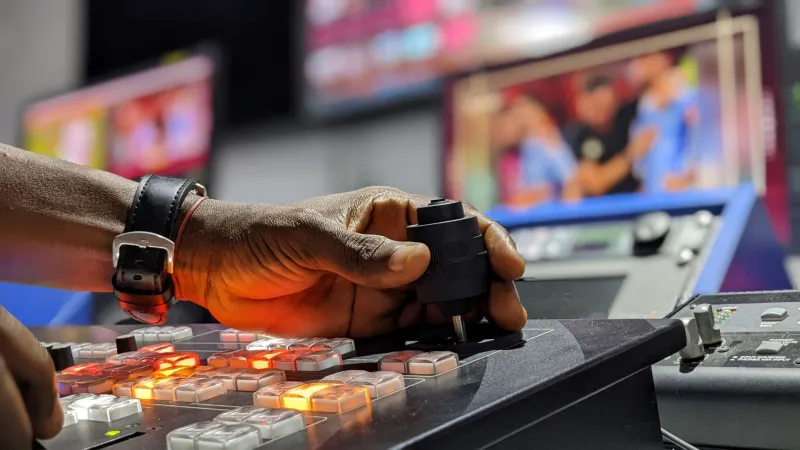
For much of British television's history, subtitles were an afterthought — a compliance box ticked somewhere between the final grade and transmission. Scrolling text riddled with phonetic errors, captions that arrived a beat too late, and rendering so poor it obscured the very image it was meant to accompany: the experience for deaf and hard-of-hearing viewers was, by any honest assessment, inadequate. That picture is changing, and with a speed that has surprised even those inside the industry.
A Regulatory Foundation, Finally Being Built Upon
Ofcom's accessibility obligations have long required broadcasters to meet minimum subtitling quotas, but the regulator's more recent enforcement posture — alongside updated guidelines introduced in 2023 — has pushed the conversation beyond mere compliance. The question is no longer simply how much subtitled content a broadcaster provides, but how well it does so. Accuracy rates, synchronisation standards, and the quality of live subtitling are now subject to greater scrutiny, and the consequences of falling short are more visible than they once were.
The BBC, which subtitles 100 per cent of its broadcast output, has in recent years invested substantially in improving the quality of its live subtitling pipeline, deploying a hybrid model that combines AI-assisted transcription with human respeaking. The results are measurable: error rates on flagship news programming have declined, and the Corporation's internal accessibility team has expanded. ITV and Channel 4 have made comparable commitments, with the latter's ongoing partnership with specialist accessibility consultancies reflecting a broader cultural shift within its commissioning and post-production workflows.
The Independent Sector Steps Forward
Perhaps the most striking development, however, is the role that independent production companies are playing in redefining what good looks like. A number of mid-sized Indies — particularly those with strong relationships with Channel 4 and the BBC's specialist factual and drama strands — have begun embedding accessibility coordinators into productions from the earliest stages of development. Rather than treating subtitling as a post-production afterthought, these companies are incorporating caption design, audio description scripting, and even BSL interpretation into their pre-production planning.
Among those leading the charge is a growing network of accessibility-focused post-production houses offering services that go well beyond traditional subtitling. Companies such as Red Bee Media and Verago have expanded their offerings, while newer entrants to the market are competing on both price and quality, creating a more dynamic supplier landscape than existed even five years ago. For commissioners, the effect has been to lower the perceived cost barrier of ambitious accessibility provision — an important psychological shift in an industry where budget pressure is relentless.
The Economic Case Is Hardening
The commercial argument for accessible content has also grown considerably more persuasive. Research published by the Hearing Loss Association and referenced in Ofcom's own market reports consistently demonstrates that subtitles are used by a far wider audience than those who require them for accessibility reasons. Studies suggest that between 80 and 85 per cent of people who regularly use subtitles do not identify as deaf or hard of hearing — they are commuters watching on mobile devices, viewers in noisy households, or simply those who find captions aid comprehension.
For streaming platforms operating in the UK market — including Netflix, Disney+, and Apple TV+ — this translates into a tangible engagement metric. Accessible content retains viewers and reduces drop-off. The economic logic, when framed in these terms, is not especially difficult to make. What has historically been missing is the data to support it at a granular level, and the industry is now beginning to produce that evidence base in earnest.
Performative Progress or Genuine Commitment?
And yet, scepticism remains warranted. Accessibility professionals working across the industry describe a persistent gap between the ambition expressed in broadcaster mission statements and the reality on the ground. Live subtitling quality, despite improvements, remains inconsistent — particularly on rolling news channels and during major live events, where the consequences of poor captioning are most keenly felt by those who depend on them.
There is also a funding question that the industry has been reluctant to address directly. Smaller independent production companies, particularly those working with limited budgets on regional or specialist programming, frequently find that the cost of high-quality accessibility provision is not fully reflected in the budgets agreed with commissioners. The result is a two-tier system in which well-resourced productions deliver genuinely excellent accessible content while others struggle to meet even baseline standards.
The Creative Diversity Network and organisations such as the Royal National Institute for Deaf People (RNID) have called on commissioners to build accessibility costs explicitly into standard production budgets, rather than treating them as an optional overhead. Some broadcasters have responded positively; others have been slower to act.
Technology as Enabler — and Its Limits
Artificial intelligence is transforming the economics of subtitling, and not always in ways that benefit quality. Automated speech recognition has become sufficiently sophisticated to handle clean, studio-recorded dialogue with reasonable accuracy, and the cost savings it offers are real. However, AI-generated captions continue to struggle with overlapping speech, strong regional accents, and technical or specialist vocabulary — precisely the contexts in which clarity matters most.
The risk, flagged by accessibility advocates with increasing urgency, is that broadcasters use the availability of cheap automated solutions to justify reducing investment in human oversight. The best models in the industry pair AI efficiency with skilled human review; the worst use automation as a cost-cutting mechanism and call the result progress.
A Moment of Genuine Possibility
British broadcasting has arrived at a juncture where the tools, the regulatory environment, and a growing body of commercial evidence all point in the same direction. The question is whether the industry possesses the collective will to translate that alignment into lasting structural change. The innovators exist, the technology is maturing, and the audience demand is demonstrably there. What remains is the harder work of embedding accessibility not as a compliance function, but as a creative and editorial value — one that shapes how British television is conceived, produced, and delivered from the outset.