Green-Lit and Gone: The Shrinking Lifespan of British Television Drama
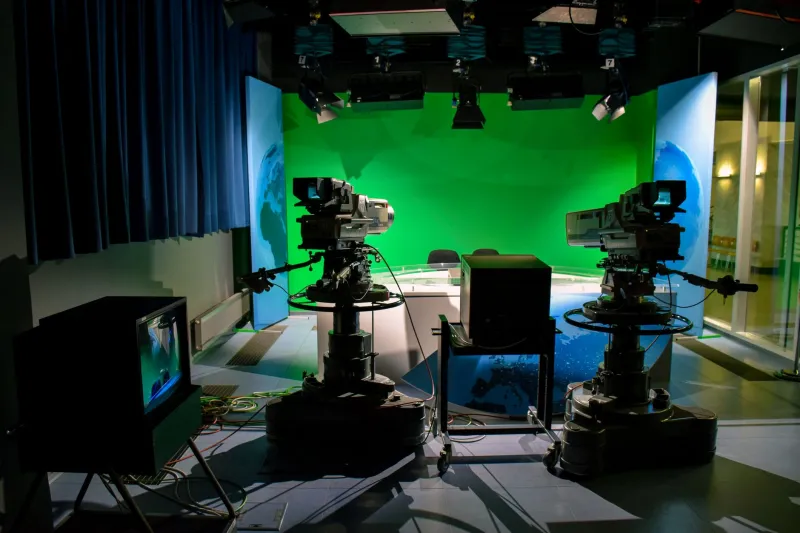
There is a peculiar cruelty to the modern television cancellation. A commission is announced with considerable fanfare — a press release, a trade interview, occasionally a panel at a festival. A writer's room assembles. Heads of department are hired. Locations are scouted. Then, somewhere between the delivery of the first series and the greenlight for a second, the silence descends. No announcement. No explanation. Simply an absence where a future once existed.
This pattern is not new, but its frequency is accelerating, and the consequences for the British drama industry are becoming impossible to ignore.
The Numbers Tell a Difficult Story
Analysis of commissioning and cancellation data across the major UK broadcasters and streaming platforms over the past four years reveals a structural shift in how television decisions are made and unmade. The proportion of British drama series renewed beyond a second series has declined sharply. Among drama commissions debuting on streaming platforms between 2020 and 2024, fewer than one in three received a confirmed second series within six months of their initial broadcast window — a figure that would have been unthinkable under the commissioning models that prevailed even a decade ago.
The BBC, historically the most patient of British broadcasters when it comes to nurturing new drama talent, has not been immune. Several high-profile series — including productions from established writers with strong critical track records — have been quietly shelved after single runs, with renewal decisions delayed for so long that cast and crew have effectively dispersed before any formal announcement is made. ITV and Channel 4 tell a similar story, and on the streaming side, the appetite for rapid return on investment has created an environment in which a series that does not achieve significant traction within its first fortnight of availability is already in jeopardy.
The Algorithm in the Room
The role of data in commissioning decisions has expanded enormously, and not always in ways that serve creative ambition. Streaming platforms in particular now operate with access to viewing metrics of extraordinary granularity: not just how many people watched, but how far through each episode they progressed, at what point they abandoned the series, and how quickly they began the next episode after completing the previous one. These figures are compelling in their precision, and they have become the primary language through which commissioning conversations are conducted.
The problem is that the metrics reward a very specific kind of storytelling. Serialised drama that builds slowly, that asks audiences to invest in complex characters over multiple episodes, and that resists easy narrative resolution is structurally disadvantaged in a data environment that prioritises immediate engagement. The shows that thrive are those designed to generate momentum in the first fifteen minutes of the first episode — a requirement that sits awkwardly alongside the traditions of British drama, which has historically prized character study, social realism, and the kind of slow-burn narrative that requires patience from both maker and viewer.
Writers in the Wilderness
For the writers most directly affected, the consequences are profound and, in some cases, career-altering. Developing a television series is an act of sustained creative investment that can consume years of a writer's professional life. When that investment is terminated without renewal — and frequently without detailed explanation — the impact extends well beyond financial loss.
Several writers who have experienced cancellations in the current climate describe a growing reluctance to pitch ambitious, long-form projects. The instinct, understandable under the circumstances, is to develop ideas that can be contained within a single series — stories with definitive endings that do not depend on a broadcaster's continued confidence. The effect, aggregated across the industry, is a slow contraction of creative ambition at precisely the moment when British drama might otherwise be capitalising on its global reputation.
The situation is compounded by the way in which cancellations are communicated — or rather, frequently not communicated. Writers, showrunners, and production companies describe months of uncertainty during which renewal decisions are neither confirmed nor denied, leaving them unable to plan, unable to move on, and unable to properly advocate for the work they have made.
Crews Caught in the Crossfire
The human cost extends considerably further than the writing room. British television drama employs tens of thousands of people across production, post-production, and ancillary services — camera operators, set designers, costume supervisors, editors, sound recordists, and the vast network of below-the-line crew whose livelihoods depend on a functioning pipeline of work. When series are cancelled without warning, that pipeline fractures.
The problem is particularly acute for crew members who have turned down other work on the assumption that a renewal was forthcoming. In an industry already characterised by precarious employment and short-term contracts, the unpredictability introduced by data-driven cancellation decisions has made long-term financial planning genuinely difficult for many of those working in it.
FRTV (the freelance workforce body) and BECTU have both raised concerns about the structural impact of shortened commissioning windows on crew welfare, and there is growing pressure on broadcasters and platforms to introduce greater transparency into the renewal decision process — including clearer timelines and, where cancellation is inevitable, earlier communication.
The Runway Problem
Perhaps the most consequential long-term effect of the current commissioning environment is what might be called the runway problem. British drama has produced some of its most celebrated and internationally successful work through series that began modestly and developed their voice over multiple series. Peaky Blinders, Fleabag, Happy Valley — each of these found its audience through a combination of critical advocacy, word-of-mouth, and broadcaster patience. Under current conditions, it is genuinely uncertain whether any of them would have been granted the runway required to reach their full potential.
The appetite for viral moments and immediate cultural impact is not without logic in a fragmented media landscape where attention is fiercely contested. But the obsession with first-week numbers and social media traction is crowding out the longer-term thinking that has historically distinguished British broadcasting at its best. A series that takes three episodes to find its rhythm, or that builds its audience over a second series, is not a failure — it is, in many cases, precisely the kind of work that endures.
Recalibrating the Conversation
There are signs, tentative but real, that the industry is beginning to interrogate its own assumptions. Some commissioners, particularly within the BBC and Channel 4, have spoken publicly about the limitations of purely data-driven decision-making and the importance of preserving space for creative risk. The Writers' Guild of Great Britain has published recommendations calling for minimum renewal decision timelines and greater transparency from commissioning bodies.
Whether these conversations translate into structural change remains to be seen. The commercial pressures driving short-termism in commissioning are real and unlikely to abate. But if British television is to protect the long-form storytelling tradition that remains its most valuable cultural export, the industry will need to find ways of resisting the gravitational pull of the algorithm — and trusting, once again, in the slower logic of good work.