Spectacle Over Intimacy: Is British Television Losing Itself in the Pursuit of the Big Screen?
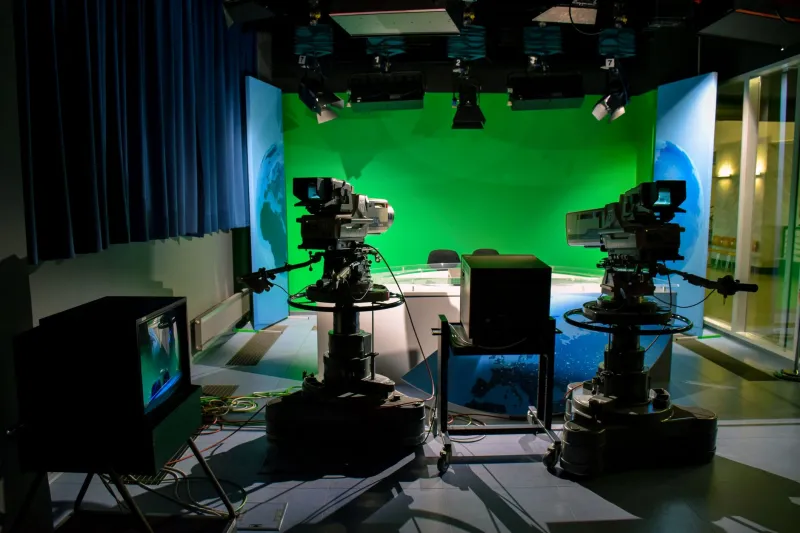
There is a moment in almost every recent prestige British drama where the camera pulls back — sometimes literally — to reveal a landscape so sweeping, a production design so lavish, that you find yourself wondering whether you are watching television at all. That question, once rhetorical, is now entirely serious. The boundary between the cinema screen and the living room has not merely blurred; in certain corners of the industry, it has been deliberately dismantled.
The summer blockbuster season, traditionally the domain of Hollywood studios and their franchise machinery, has begun to exert an unexpected gravitational force on British broadcasting. Commissioners, producers, and writers are increasingly measuring their work against theatrical benchmarks — not because audiences are demanding it, but because the platforms funding much of Britain's most ambitious drama are doing so.
The Talent Migration Problem
The most tangible symptom of this shift is the movement of talent. Directors who once divided their careers comfortably between features and episodic television now find themselves recruited specifically to bring a cinematic sensibility to streaming commissions. Cinematographers celebrated for their work on theatrical releases are being attached to drama series with explicit briefs to deliver something that feels, in the words of one senior producer speaking to Televisual, "like a six-hour film rather than a television show."
This is not an entirely new phenomenon — Dennis Potter was exploring the theatrical possibilities of television drama decades ago, and the BBC's single play tradition demonstrated early that the medium could carry genuine artistic ambition. But the current moment feels qualitatively different. Where previous generations of filmmakers brought cinematic craft to television in service of the story, today's migration is increasingly driven by budget and platform positioning rather than creative necessity.
The consequence is a gradual hollowing out of television's own directorial tradition. Editors, directors of photography, and production designers trained specifically within the rhythms and constraints of episodic drama are finding their expertise devalued against the premium placed on film-school credentials and theatrical portfolio work.
What British Television Does Best
It is worth pausing to consider what is actually at stake. British television drama has historically distinguished itself not through scale but through precision — the ability to locate enormous emotional truth within confined spaces, to allow performance and dialogue to carry weight that spectacle cannot. From the claustrophobic intensity of early ITV thrillers to the kitchen-sink naturalism of BBC social realism, the tradition has been one of doing more with less.
Dramas such as I May Destroy You, This Is England (in its televisual iterations), and more recently Adolescence have demonstrated that the medium retains a capacity for intimacy that cinema, for structural and commercial reasons, struggles to replicate. These productions succeeded precisely because they resisted the temptation to inflate. Their power derived from restraint.
The danger posed by blockbuster aesthetics is not that spectacle is inherently wrong — it is that spectacle, once adopted as a default mode, crowds out the conditions in which quieter, stranger, more distinctly British work can emerge. When every drama series is competing to look like a theatrical event, the space for television that looks unmistakably like television begins to contract.
The Commissioner's Dilemma
For those holding the commissioning purse strings, the pressure is acute and, in fairness, not entirely irrational. Streaming platforms have reset audience expectations, and the global market rewards productions with a visual language that travels. A British drama series with cinematic production values stands a more credible chance of international acquisition than one that deliberately embraces the textures of domestic broadcasting.
Yet this logic, followed to its conclusion, produces a troubling outcome. If every British broadcaster and platform calibrates its drama slate against the aesthetics of theatrical releases, the result is not a richer television landscape but a more homogeneous one. The distinctiveness that has made British drama a desirable export — its wit, its class consciousness, its willingness to be uncomfortable — risks being smoothed away in the process of making it look expensive.
Several independent producers Televisual has spoken with over recent months have noted a growing tendency in development conversations to foreground visual ambition before narrative concept. One described being asked, in an early pitch meeting for a contemporary drama, whether the project had "a cinematic universe to expand into." The question would have been unthinkable a decade ago.
The Audience Perspective
There is also a question about what British audiences actually want from their television, as distinct from what the industry believes they should want. Viewing data consistently suggests that character-driven, dialogue-rich drama retains a loyal and substantial audience in the United Kingdom. The enduring performance of long-running series on ITV and Channel 4, alongside the continued appetite for BBC drama that prioritises story over production scale, indicates that the appetite for intimate television has not evaporated.
The risk is that in chasing a notional prestige viewer — one who might otherwise spend their evening at a multiplex — broadcasters neglect the far larger audience that has never asked for its television to become cinema. Spectacle, after all, is most powerful when it is earned rather than assumed.
Finding a Sustainable Balance
None of this is to argue that British television should retreat into deliberate austerity or resist formal ambition on principle. The medium has always evolved, and the technical possibilities now available to even modestly budgeted productions are genuinely remarkable. The question is not whether British television should be visually ambitious, but whether visual ambition should become the primary criterion by which quality is measured.
The most encouraging productions emerging from Britain's drama sector at present are those that deploy cinematic scale selectively — using it to amplify emotional stakes rather than substitute for them. They understand that a single well-written scene in a small room can do more work than a panoramic drone shot over a recognisable British landscape, however beautifully composed.
The box office effect on British television is real, and its influence will only intensify as streaming platforms continue to shape the commissioning environment. The industry's challenge is to absorb that influence without surrendering the particular intelligence and restraint that have made British television, at its best, something no multiplex can replicate. That balance will not be maintained by accident. It will require commissioners, producers, and broadcasters to make a conscious and recurring choice about what they are actually in the business of making.