Lost Before the Cameras Roll: The Development Purgatory Consuming British Television's Most Promising Ideas
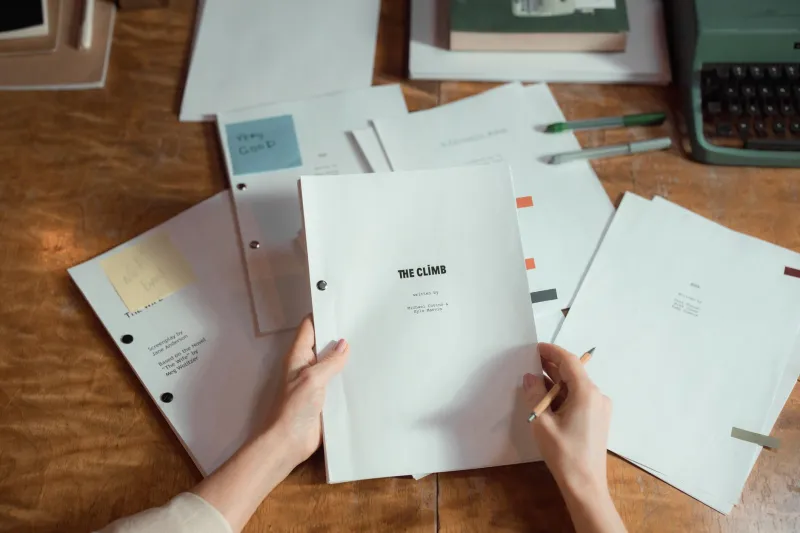
There is a particular kind of grief familiar to writers' rooms across the country — the slow, quiet mourning of a project that everyone believed in, that gathered momentum through months of meetings and redrafts, that seemed perpetually on the cusp of a green light, and then simply stopped. No announcement. No cancellation. Just silence, and the creeping realisation that the idea has been absorbed into the system and is unlikely to resurface.
Development hell is not a new phenomenon. The television industry has always harboured projects that circulate endlessly without resolution. What has changed, and changed dramatically over the past decade, is the scale. The proliferation of streaming platforms, the expansion of commissioning budgets at legacy broadcasters attempting to remain competitive, and the sheer volume of intellectual property being optioned at any given moment have combined to create conditions in which promising British television concepts are disappearing faster than they are reaching screen.
The Illusion of Abundance
On the surface, the current landscape appears generous. Commissioners at Netflix, Amazon, Apple, Disney+, Paramount+, and ITVX sit alongside those at the BBC, Channel 4, and Channel 5, each nominally hungry for the next breakout British drama or distinctive factual series. Agents and producers speak of a market flush with opportunity. The number of active development deals has never been higher.
Yet the experience reported by writers and independent producers tells a different story. Precisely because there are so many buyers, the act of committing to any single project has become freighted with hesitation. Commissioners, acutely aware that their choices will be scrutinised against a vast field of alternatives, have grown cautious in ways that contradict the industry's outward confidence. The result is a paradox: an abundance of platforms has generated a scarcity of decisions.
Development budgets are being spent — sometimes generously — on projects that are then held in limbo while commissioning teams attempt to read the market, second-guess their competitors, and build internal consensus. Scripts are commissioned, notes are given, rewrites are requested, and the cycle repeats. The cost is borne not merely by the writers and producers who have invested their time and creative energy, but by the British television landscape itself, which is being quietly drained of the distinctive, risk-taking work it has historically produced.
The Commissioner's Dilemma
To understand how this happens, it is worth considering the position of the commissioner. They are operating within institutions that are, in most cases, under significant financial pressure. Subscriber growth targets, advertising revenue shortfalls, and the perpetual anxiety of the ratings cycle create an environment in which backing an unconventional project carries genuine professional risk. The safer calculation — to hold a promising concept in development while waiting for market conditions to clarify — is entirely rational from an individual career perspective, even as it proves damaging in aggregate.
This structural incentive towards inaction is compounded by the sheer cognitive burden of managing an oversaturated market. When a commissioning editor receives hundreds of pitches per year and holds dozens of projects in active development simultaneously, the capacity for deep engagement with any single concept is necessarily limited. Ideas that might flourish under sustained creative attention instead receive periodic, distracted consideration, their momentum dissipating between meetings.
Senior figures within the independent sector have begun to speak about this dynamic with unusual candour. The consensus, expressed off the record with some regularity, is that the industry is generating enormous amounts of development activity that functions primarily as a holding mechanism — a way of maintaining relationships and options without committing resources to the difficult, expensive work of actually making television.
What Gets Lost
The projects most vulnerable to this process tend to be those that are hardest to categorise. Conventional formats — the returning procedural, the familiar true crime documentary, the celebrity-fronted entertainment series — carry sufficient precedent to generate confidence. Commissioners know what they are buying and have a reasonable expectation of what the audience will accept.
It is the genuinely original work that suffers most acutely. The single drama that refuses easy genre classification. The authored documentary series built around an unconventional perspective. The comedy that requires a commissioning team to trust a voice they have not heard before. These are precisely the projects that British television has, at its best, been most celebrated for producing — and they are precisely the projects most likely to be held in development indefinitely, revised towards safety, or quietly abandoned.
The irony is considerable. The platforms that have entered the British market with promises of creative ambition and distinctive storytelling have, in many cases, replicated the same structural conservatism they claimed to be disrupting. The development process functions as a filter, and what it filters out most consistently is the unfamiliar.
The Hidden Costs
The financial costs of development purgatory are significant but rarely discussed publicly. Writers who have invested a year or more in a project that does not proceed receive their development fee but lose the opportunity cost of that time, the momentum of their careers, and frequently the emotional investment that sustained them through the process. Smaller independent production companies, which often operate on narrow margins, find their resources tied up in projects that may never generate a return.
The broader cultural cost is harder to quantify but no less real. Each idea that stalls in development represents a story that is not told, a perspective that is not offered to British audiences, a creative ambition that is not realised. Over time, the cumulative effect of this attrition is a television landscape that trends towards the familiar — not because commissioners lack taste or ambition, but because the system has evolved in ways that make originality structurally difficult to sustain.
A Path Forward
There is no simple remedy for a problem so deeply embedded in the economics and psychology of commissioning. However, several approaches are being discussed within the industry with increasing seriousness.
Some producers advocate for the reintroduction of firm decision timelines — a commitment, embedded in development agreements, to reach a go or no-go conclusion within a defined period. Others argue for smaller, faster development processes that prioritise rapid iteration over extended refinement, reducing the opportunity for projects to become institutionally stranded.
There is also a growing conversation about the role of public broadcasters in modelling different behaviour. The BBC and Channel 4, operating under public service obligations and with a stated commitment to creative risk, are arguably better positioned than commercial streamers to champion work that does not conform to established patterns. Whether they will exercise that position with sufficient conviction remains an open question.
What is not in doubt is the urgency of the problem. British television's reputation — built across decades on precisely the kind of original, authored, culturally specific work that development purgatory most readily consumes — is not an inexhaustible resource. The ideas that are being lost today represent the distinctive voice of tomorrow, and the industry would do well to consider, with some seriousness, what it is choosing to bury.