Fading Into the Background: How British Television Stopped Listening to Its Own Sound
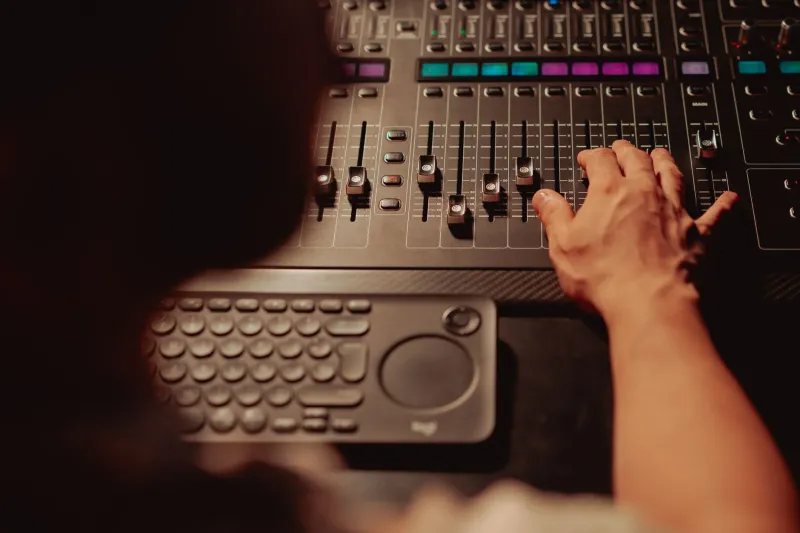
There is a moment in almost every great piece of television when sound does something extraordinary — when the ambient hum of a hospital corridor, the precise weight of a closing door, or the barely audible breath of a grieving character communicates something that no line of dialogue could. These moments are not accidents. They are the product of skilled, patient, often undervalued craft. And increasingly, across British broadcasting, they are disappearing.
The reasons are familiar: compressed schedules, shrinking post-production budgets, and an industry-wide fixation on visual spectacle that has left audio storytelling treated as an afterthought rather than an equal creative discipline. The consequences, though less visible than a poorly lit scene or a weak script, are felt in every living room where a drama fails to land as it should, where tension dissipates rather than builds, where an audience remains at arm's length from a story that ought to grip them entirely.
The Budget That Nobody Talks About
Ask any experienced sound designer working in British television today and the picture they describe is remarkably consistent. Audio post-production, once allocated a meaningful proportion of overall production budgets, has been progressively squeezed over the past decade. Where a high-end drama might once have devoted three to four weeks to sound editing, mixing, and design, many productions now compress that process into days.
"The visual side gets protected because it's what commissioners and executives see in the edit," explains one BAFTA-nominated sound designer who has worked across flagship BBC and ITV dramas over two decades. "Sound is still perceived as something you fix at the end, rather than something you build throughout. That fundamental misunderstanding costs productions enormously, but nobody's keeping score on audio."
The figures, where they can be obtained, are striking. Industry sources suggest that audio post-production now accounts for as little as two to three per cent of total production spend on mid-range drama series — a proportion that has declined sharply even as overall production costs have risen. On American prestige productions, comparable figures frequently sit between six and ten per cent, a differential that reflects not merely deeper pockets but a genuine philosophical commitment to sonic craft.
The Talent Drain No One Is Counting
The consequences of sustained underinvestment are beginning to manifest in a way that should concern broadcasters beyond the purely creative. British sound designers, mixers, and Foley artists — many of them trained through the BBC's own apprenticeship pipelines or through institutions such as the National Film and Television School — are increasingly finding that the most rewarding and remunerative work lies elsewhere.
International streaming productions filming in the United Kingdom, from Netflix originals to HBO co-productions, routinely offer audio professionals substantially better rates, longer post schedules, and creative environments in which sound is treated as a primary storytelling tool rather than a finishing process. Several senior practitioners have relocated their primary working relationships to continental European broadcasters, where traditions of audio design in drama remain more robustly supported.
"I love working in British television. It's where I trained, it's where I built everything I know," says one sound supervisor who has recently completed a major Scandinavian co-production. "But the honest truth is that the respect for what we do, the time and the budget to do it properly — that exists more reliably elsewhere right now. That's not a comfortable thing to say, but it's true."
The irony is acute. British broadcasting spent decades exporting both its creative talent and its technical expertise around the world. The BBC's audio heritage, in particular, represents a tradition of sound craft that has influenced global broadcasting. That legacy is now being eroded not through any dramatic rupture but through the slow accumulation of decisions that treat sound as expendable.
What Is Actually Being Lost
To understand the creative cost of diminished sound design investment, it is worth considering what sophisticated audio work actually accomplishes. At its most fundamental, it creates the psychological and emotional environment within which a viewer receives a story. The ambient texture of a scene — its room tone, its spatial depth, the relationship between foreground and background sound — communicates information about character, setting, and mood that operates largely below conscious perception.
When this work is compressed or underfunded, the effect is not always immediately obvious to a general audience. What viewers register, often without knowing why, is a drama that feels slightly flat, slightly unconvincing, somehow less immersive than it ought to be. The emotional architecture is incomplete, and the story struggles to achieve the resonance it might otherwise command.
Foley work — the painstaking recreation of physical sound, from footsteps on specific surfaces to the precise acoustic quality of a particular environment — is among the first disciplines to suffer when budgets contract. Yet it is Foley that gives a production its tactile reality, the sense that the world on screen has genuine physical weight. Without it, even the most beautifully photographed drama can feel curiously hollow.
"People say audiences don't notice sound," observes one re-recording mixer whose credits span thirty years of British film and television. "What they actually mean is that audiences don't notice good sound. They absolutely notice when it isn't there — they just don't know what they're missing."
A Question of Priorities
The problem is not simply financial. It is cultural. Within the commissioning and production culture of British broadcasting, visual literacy is broadly assumed among senior decision-makers. Conversations about cinematography, production design, and performance are conducted with confidence and nuance. Equivalent conversations about sound design are comparatively rare, and the expertise to have them is less evenly distributed.
This asymmetry shapes how resources are allocated and how creative decisions are made. When a production faces pressure to reduce costs, audio post-production presents as a relatively painless target to those who do not fully understand its contribution. The savings are immediate and visible on a spreadsheet. The creative damage is diffuse and harder to quantify.
Several technical directors and post-production executives spoken to by Televisual suggested that the solution requires intervention at multiple levels: better audio education within commissioning teams, clearer minimum standards for audio post-production as part of broadcaster delivery requirements, and a renewed commitment from public service broadcasters in particular to model the investment levels that the craft demands.
The BBC, whose charter obligations include the maintenance of high production standards, would seem a natural place to reassert the value of audio craft. ITV Studios and Channel 4's production arms, both of which retain significant in-house expertise, could similarly choose to make sound design a visible creative priority rather than an invisible line item.
Listening Again
British television has always been at its finest when it operates as a genuinely holistic creative endeavour — when writing, direction, performance, design, and sound work in concert toward a unified emotional purpose. The diminishment of any one of those disciplines weakens the whole.
Sound design is not a luxury or a finishing touch. It is, at its best, the medium through which television truly inhabits its audience — the craft that makes a story feel not merely seen but genuinely experienced. Recovering that understanding, and investing accordingly, is not simply a matter of technical standards. It is a question of what kind of television British broadcasters believe they are in the business of making.
The silence between scenes was never meant to be empty. Somewhere along the way, the industry forgot to listen.