Heard But Never Seen: How British Television's Sound Craft Became Its Most Powerful Storytelling Tool
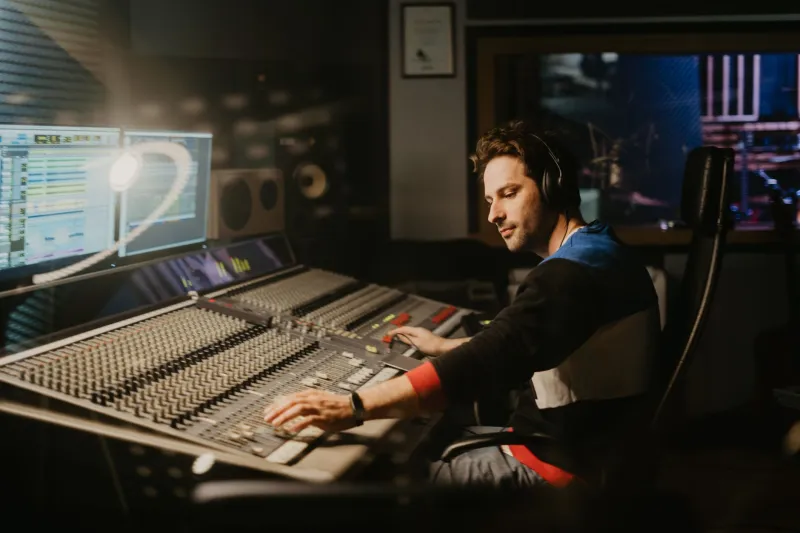
There is a moment in the second series of The Bear—an American production, admittedly, but one that sparked considerable conversation among British audio professionals—where the absence of a score does more dramatic work than any line of dialogue could. British sound designers noted it immediately. Not because it was alien to them, but because it was precisely the kind of choice they make, week after week, on productions that receive a fraction of the critical scrutiny. The irony was not lost on them.
British television has long prided itself on the quality of its drama, its comedy, and its factual output. The performances, the writing, the locations—these are the elements that fill column inches and attract awards attention. What receives considerably less examination is the sonic architecture that holds all of it together: the sound design, the composition, the audio post-production decisions that determine not merely how a programme sounds, but how it makes you feel.
The Invisible Architecture
Ask any experienced sound designer working in British television what their job involves, and you will receive an answer far more complex than the title implies. It is not simply a matter of ensuring dialogue is audible or that background noise is appropriately managed. It is the deliberate construction of an emotional landscape—one that the viewer inhabits without ever consciously registering its presence.
"The best compliment I ever receive," says one BAFTA-nominated sound supervisor who has worked across several of the past decade's most celebrated British dramas, "is when someone says they didn't notice the sound. That means it worked. That means it was doing exactly what it should." The professional in question asked not to be named, citing a weary familiarity with the industry's tendency to overlook audio departments in press materials and awards campaigns alike.
This invisibility is both the discipline's greatest achievement and its most persistent professional frustration. When the audio work is seamless—when the low hum beneath a tense confrontation raises your pulse without your awareness, when the sudden withdrawal of ambient sound in a domestic scene makes a silence feel unbearable—it disappears entirely into the fabric of the viewing experience. The craft succeeds by erasing itself.
Where Sound Changed Everything
Consider Happy Valley, Sally Wainwright's landmark crime drama for the BBC. Much of the critical attention focused, rightly, on Sarah Lancashire's performance and Wainwright's writing. Less discussed was the sound department's decision to use the ambient textures of the Calder Valley—wind across moorland, distant machinery, the particular acoustic quality of Yorkshire stone—not merely as backdrop but as emotional punctuation. The landscape was not simply seen; it was heard in ways that made the drama's themes of isolation and resilience feel genuinely embedded in place.
Similarly, This Is Going to Hurt, the BBC's adaptation of Adam Kay's memoir, deployed its sound design with surgical precision. The fluorescent hum of NHS corridors, the rhythmic intrusions of medical equipment, the way that institutional noise pressed in on Ben Whishaw's character—these choices were not incidental. They were the sonic equivalent of the script's argument about systemic pressure and individual endurance.
In British comedy, the discipline is, if anything, more demanding. The timing of a sound effect, the precise moment at which ambient noise drops out to emphasise a punchline—these decisions require an understanding of comedic rhythm that is rarely taught formally and almost never credited publicly. Several composers working in British comedy have noted that their contribution to a programme's tone is frequently absorbed into the general perception of a show's success without any specific attribution.
An Industry Slow to Listen
The structural reasons for this invisibility are not difficult to identify. British television's promotional machinery—its press junkets, its talent interviews, its awards submissions—is built around faces. Actors, showrunners, directors: these are the figures around whom narratives of creative achievement are constructed. The post-production phase, where much of the sonic work occurs, happens after principal photography has concluded, often under significant budget and time pressure, and almost always away from the public-facing apparatus of a production.
BAFTA's Craft Awards do include categories for sound, and the Royal Television Society acknowledges audio achievement within its own programme. Yet industry professionals in the field are candid about the gap between these formal acknowledgements and the broader cultural conversation about what makes British television distinctive. When a drama is praised for its atmosphere, for the way it immerses viewers in a particular world, the sound department is rarely invited to accept the compliment.
Budgetary pressures have compounded this marginalisation. As commissioning budgets have tightened across both public service broadcasters and streaming platforms commissioning British content, post-production schedules have been compressed. Sound designers and composers describe being handed fewer weeks to complete work that previously would have been given considerably more time. The creative ambition remains; the resource to realise it is increasingly constrained.
Why It Matters Globally
There is a practical argument to be made here that extends beyond professional recognition. British television exports exceptionally well, and a significant part of its international appeal lies in qualities that are difficult to quantify but immediately perceptible: a sense of place, an emotional authenticity, a tonal consistency that distinguishes it from American and European competitors. Sound design is a fundamental contributor to all three.
When international buyers and distributors describe what draws them to British drama, they frequently use language—atmosphere, texture, immersion—that is, at its core, sonic language. The irony is that the discipline most responsible for generating these qualities is the least likely to be represented in the conversations that celebrate them.
Some within the industry are beginning to push back. A small number of British productions have started including sound supervisors and lead composers in press materials and talent interviews, recognising that the conversation about creative craft is impoverished when it excludes the people responsible for what audiences actually hear. It is a modest shift, but a meaningful one.
A Case for Listening More Carefully
The argument is not simply that sound professionals deserve greater recognition, though they do. It is that the critical and commercial conversation about British television is genuinely incomplete without a more sophisticated engagement with audio craft. Reviewers who discuss a drama's mood, its sense of dread or warmth or melancholy, without examining how that mood was acoustically constructed are describing the effect while ignoring a significant portion of its cause.
British television has spent decades cultivating a global reputation built on craft. Writing, performance, production design—these disciplines receive the scrutiny that sustains and improves them. Sound deserves the same attention. Not because its practitioners require validation, but because understanding what they do is essential to understanding why British television, at its best, resonates in the way that it does.
The silence between scenes is rarely accidental. It is time the industry started saying so.