Too Much of Everything: How British Broadcasting's Content Glut Is Leaving Audiences Adrift
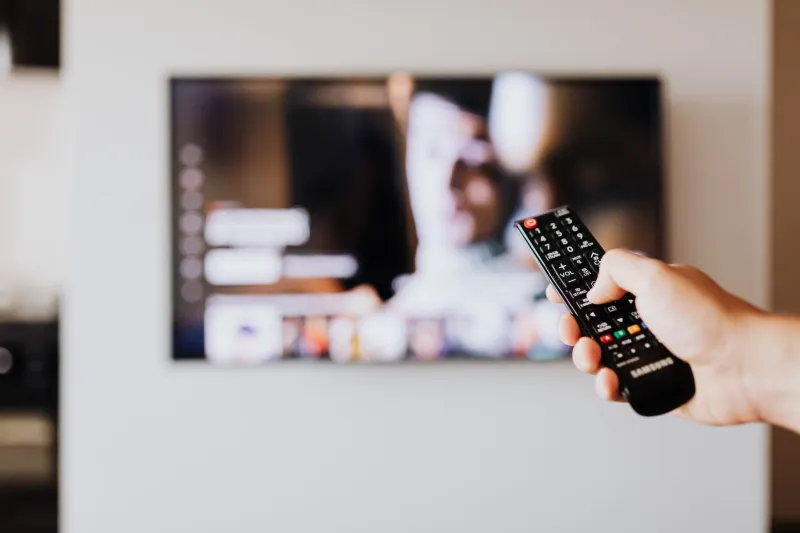
There was a time, not especially distant, when a new British drama series arriving on a Tuesday evening was an occasion. Schedules were curated with the care of a gallery hanging, and the relative scarcity of options meant that audiences arrived reliably, often in their millions. That era has not merely passed — it has been methodically dismantled, replaced by an architecture of abundance that is beginning to show some troubling structural cracks.
Commissioning volumes across the British television landscape have risen sharply over the past five years. The arrival and rapid expansion of streaming platforms — from Netflix and Disney+ to BritBox and ITVX — has created an insatiable appetite for new content, compelling domestic broadcasters to accelerate their own output simply to remain competitive. The BBC, ITV, Channel 4, and their respective streaming arms are all producing more than at any point in their histories. And yet, by almost every meaningful measure of audience engagement, something has gone wrong.
The Numbers Behind the Noise
Audience research conducted by Barb throughout 2023 and into 2024 consistently identified a phenomenon that industry professionals have taken to calling 'choice paralysis' — a condition in which viewers, confronted with thousands of available titles across multiple platforms, spend increasing amounts of time browsing and decreasing amounts of time actually watching. One internal audience research specialist, speaking to Televisual on condition of anonymity, described the situation bluntly: "We are producing more content than at any point in the history of British television. We are also seeing some of the lowest levels of sustained engagement with individual titles. Those two facts are not unconnected."
The mathematics are not difficult to follow. When a broadcaster releases a new series into an environment containing hundreds of competing titles — many of them from well-resourced American and European studios — the likelihood of any single commission achieving cultural traction diminishes considerably. Schedulers who once wielded genuine power over public conversation, by placing a drama in a prime Tuesday slot or anchoring a Saturday evening with a flagship entertainment series, now find their traditional instruments considerably blunted.
Scheduling in the Age of Fragmentation
For schedulers, the challenge has evolved from curation to something closer to archaeology — the work of excavating a single title from beneath an enormous pile and persuading an audience that it merits their finite attention. Several senior scheduling professionals spoken to by Televisual described a working environment that feels fundamentally altered.
"The job used to be about timing and adjacency," explained one experienced scheduler at a major British broadcaster. "You understood your audience's rhythms — what they wanted on a Monday, how they behaved on a Sunday. Now you're competing against an algorithm that has already decided what someone should watch before they've even opened your app."
The streaming platforms themselves have introduced an additional complication. Their commissioning decisions are driven partly by data models that prioritise content likely to reduce subscriber churn rather than content likely to generate broad cultural conversation. The result is a commissioning culture that, paradoxically, produces vast quantities of material whilst simultaneously reducing the likelihood that any individual piece will achieve the kind of shared national moment that once defined British broadcasting at its finest.
The Commissioning Treadmill
For those working within commissioning departments, the pressure to maintain output has created its own particular strain. Several independent production companies spoken to by Televisual described a commissioning environment in which speed and volume have begun to supersede the slower, more deliberate work of developing genuinely distinctive projects.
"There is an enormous pressure to fill the library," said one senior executive at a mid-sized independent. "Commissioners are under pressure from their platforms to deliver volume. That pressure flows downstream to us, and the honest consequence is that some projects that might have benefited from another eighteen months in development are pushed into production before they're ready."
This acceleration of the development-to-production pipeline carries consequences that are visible to attentive viewers, even if they cannot always articulate precisely what feels slightly off about a given series. Characters are underdeveloped. Narrative structures feel mechanical. Dialogue lacks the particularity that distinguishes memorable television from merely adequate television.
Audience Fatigue as an Industry Problem
The phenomenon of viewer fatigue is not merely an inconvenience for individual broadcasters — it represents a structural threat to the commercial sustainability of the British television industry. Advertising revenues on linear channels remain under pressure from digital competitors. Subscription services face an increasingly sceptical consumer base questioning whether multiple platform subscriptions represent good value. When audiences feel overwhelmed rather than engaged, the entire funding model that supports British production begins to wobble.
Some within the industry argue that the solution lies not in producing less but in promoting more intelligently — in developing the kind of editorial voice and curation that once made individual channel identities meaningful. Channel 4's recent efforts to reassert a distinctive commissioning character, and the BBC's continued investment in its iPlayer recommendation architecture, suggest that at least some broadcasters recognise the problem.
Others are less optimistic. "The honest answer," said one audience research specialist, "is that we created this environment and we don't yet have a credible plan for navigating our way out of it. The platforms need content to justify their existence. Broadcasters need content to compete. And somewhere in all of that, the audience — the actual human being sitting on a sofa trying to decide what to watch — has been rather left behind."
Finding a Way Through
There are, tentatively, signs of recalibration. Several major streaming platforms have publicly acknowledged that their commissioning strategies have favoured quantity over quality, and some have begun reducing their overall output volumes in favour of fewer, better-resourced productions. Whether British broadcasters will feel able to follow suit, given the competitive pressures they face, remains genuinely uncertain.
What is clear is that the current trajectory is not sustainable. An industry that floods its own market with content, and then wonders why audiences feel disengaged, is not grappling honestly with the nature of its predicament. The paradox of abundance — more content, less connection — is not a problem that will resolve itself through yet more commissioning. It will require the kind of editorial courage and strategic patience that the current environment makes extremely difficult to sustain.