The Comfort Trap: Why British Television Keeps Renewing What It Already Knows
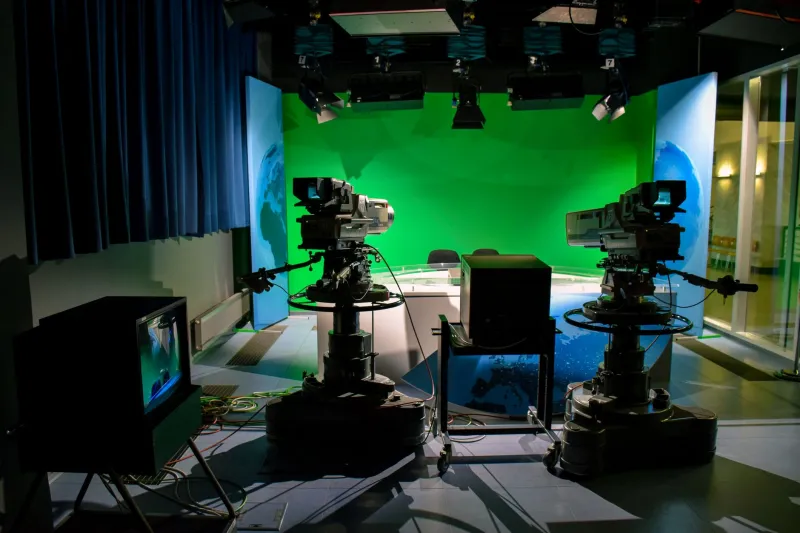
Consider, for a moment, the British panel show. It arrived in its modern form in the early 1990s, achieved genuine cultural significance through the middle portion of that decade, and has since reproduced itself with a fidelity that borders on the biological. There are now panel shows about sport, news, comedy, food, music, and — in what may represent the form's logical endpoint — panel shows about other panel shows. Each new iteration arrives with a slightly different configuration of comedians arranged around a slightly different desk, performing a slightly different version of the same essential transaction. Commissioners greenlight them. Audiences watch them. And the cycle continues, largely undisturbed by any serious interrogation of whether it should.
This is not, it should be said, an argument against the panel show as a form. At its finest — and it has had its finest moments — the format is capable of genuine wit, social commentary, and the kind of spontaneous human connection that no scripted drama can manufacture. The argument, rather, is about what the panel show's extraordinary longevity reveals about the commissioning culture that sustains it: a culture that has come to regard the familiar not merely as commercially sensible but as inherently preferable to the unknown.
The Economics of the Proven
The commercial logic underpinning format repetition is not difficult to understand, and it would be disingenuous to dismiss it entirely. A broadcaster investing in a new series of an established panel show knows, with reasonable precision, what it will cost, how it will perform, and what risks it carries. It knows its audience, understands its talent requirements, and can predict its critical reception within a fairly narrow range. The same cannot be said of an entirely original commission, which carries genuine uncertainty at every stage of its development and production.
In an industry facing sustained financial pressure — declining advertising revenues, rising production costs, increasingly demanding streaming competitors — the appeal of certainty is understandable. What is less understandable, and considerably more troubling, is the degree to which this commercial pragmatism has hardened into something resembling an aesthetic philosophy. The question being asked in many commissioning meetings is no longer simply "will this work?" but "has something like this worked before?" — and those are very different questions.
The Format Franchise as Creative Ceiling
British television has an extraordinary history of format innovation. The country has exported some of the most successful television formats in global broadcasting history — from quiz shows to reality competitions to documentary series that have been adapted in dozens of territories. This is a genuine and legitimate source of industry pride. What receives less attention is the degree to which that success has created its own constraints.
When a format proves successful on the international market, it generates a set of incentives that are difficult for individual broadcasters to resist. The format can be renewed domestically, sold internationally, and adapted across multiple territories — each transaction generating revenue without requiring the creative investment that an original commission demands. The result is an industry that has become extraordinarily efficient at extracting value from existing intellectual property whilst simultaneously becoming less adept at generating new ideas worth extracting value from.
The reality competition genre illustrates this dynamic with particular clarity. The formats that dominate British prime-time schedules — the talent competitions, the property shows, the celebrity-adjacent endurance formats — are, almost without exception, either direct adaptations of proven international formats or domestic originals that have been running for long enough to function as formats in their own right. Original unscripted commissions — formats that have not yet demonstrated their commercial viability through at least one series — have become genuinely rare in mainstream scheduling.
The Origination Problem
This is not simply a matter of broadcaster timidity, though timidity is certainly a factor. The structural conditions governing how ideas reach commissioning decisions create their own obstacles to originality. Development budgets at major broadcasters have been reduced in real terms over the past decade. The time available for commissioners to engage with speculative or early-stage ideas has contracted. And the intermediary layer of independent production companies — who might once have been able to develop genuinely experimental concepts over extended periods — now operate in a commercial environment that rewards speed and volume over depth and originality.
The consequence is that the ideas most likely to reach a commissioning decision are those that can be explained quickly, referenced against existing successful formats, and produced without significant development risk. "It's like [successful format] but with [minor variation]" has become, according to several development executives spoken to by Televisual, the most reliable structure for a commissioning pitch. Original ideas — those that cannot be readily explained by reference to something else — face a structural disadvantage before they have even entered the room.
What Is Actually Being Protected
The standard defence of format-led commissioning is that it serves the audience — that viewers want the familiar, that comfort and reliability are legitimate viewing pleasures, and that broadcasters are simply responding to demonstrated demand. There is some truth in this. Audiences do return to established formats, and the viewing figures for long-running reality franchises remain, in many cases, the strongest in their respective genres.
But this argument conflates what audiences choose from the options available with what they might choose if the options were different. Viewers cannot express a preference for original programming that has not been commissioned. They cannot demonstrate appetite for creative risks that have not been taken. The audience research that broadcasters cite in defence of format commissioning is, by its nature, research into responses to existing content — it tells us relatively little about what audiences might embrace if presented with something genuinely new.
There is also a longer-term consideration that the format-first approach tends to obscure. The programmes that have defined British television at its most culturally significant — the dramas, comedies, and documentary series that are remembered decades after their initial broadcast — were almost invariably original commissions that would have been difficult to justify on the basis of precedent. They succeeded not because they resembled something that had already worked, but because they offered something that audiences had not previously encountered.
A Creative Reckoning
British television is not, yet, creatively exhausted. There remains genuine originality in its drama, its comedy, and even, occasionally, in its entertainment commissions. But the structural conditions governing what gets commissioned are pushing consistently in the direction of the familiar, the proven, and the safely replicable. If those conditions are not actively interrogated — by commissioners, by broadcasters, and by the industry bodies that shape the environment in which they operate — the imaginative range of British television will continue to narrow, one format renewal at a time.
The comfort trap is not comfortable for everyone. For viewers who value British television's capacity for surprise, for writers and producers with genuinely original ideas, and for an industry whose international reputation rests substantially on its creative distinctiveness, it is becoming increasingly confining. The question is whether those with the authority to widen it have the appetite to do so.